Fighting For Your Business.

Full article
The role of technology and innovation in solving African challenges Total Views=790
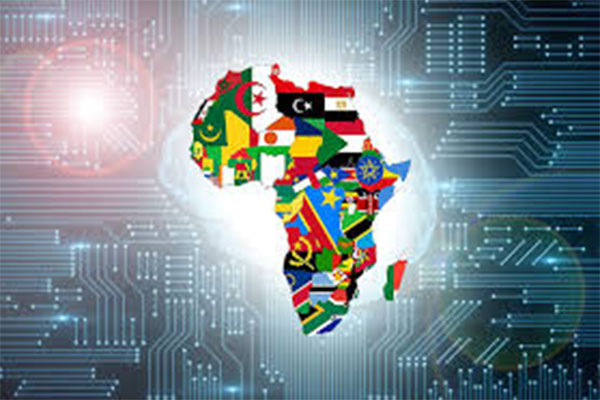
Innovation and powerful new technologies have the potential to spark significant economic growth across Africa. Digital Earth Africa is constantly striving to empower innovators across the continent by providing free and accessible cutting-edge Earth observation data that will help to solve some of the biggest challenges facing Africa – including water management and food security.
With the objective of discovering how Earth observation can drive innovation and growth in both large and small organisations in Africa, Digital Earth Africa is collaborating with FrontierSI, NGIS and COOi Studios to kick off our collaborative Industry Engagement Study.
At the beginning of the Study, we sat down with COOi Studios’ Principal Consultant, Kealeboga Lenyibi to discuss how innovation and technology are providing solutions to a range of business obstacles.
Innovation as a driver of growth
‘In the African business landscape,’ Kealeboga explains, ‘there is a huge opportunity to drive inclusive growth through innovation.’
The combination of a young population and the growing adoption of technology provides a backdrop for businesses in Africa to leverage digital innovation, attracting a younger audience and increasing their customer base. Kealeboga explains that by inviting young innovators to the table, businesses will: ‘open their doors to a more profitable and competitive landscape, enhancing their ability to gain a competitive edge and boosting economic growth’.
Technology is the backbone of digital innovation and is essential for economic growth and development. This is clear in recent technological innovations facilitating trade, expanding quality education, and allowing access to capital for the society’s poorest.
The internet, mobile money, satellite data and imagery, machine learning, and blockchain are some of the technologies advancing progress in our society today. There is also trade tech, leveraging the internet of things (IoT), artificial intelligence, 5G, cloud-based platforms, and other Fourth Industrial Revolution (4IR) technologies to improve processes in digitising global trade and trade finance.
According to UNICEF’s Information and Communication Technology Division (ICTD), 113 countries used real-time information technology at scale in 2020 alone. These countries make up 75 percent of world countries, and African countries are among them.
Innovators within the continent are using technology to solve various challenges, from borderless payments to healthcare delivery, financial access, agriculture, and logistics. Undoubtedly, Africa is improving in using technology for development (T4D) thanks to the brilliant young Africans rising to the occasion.